

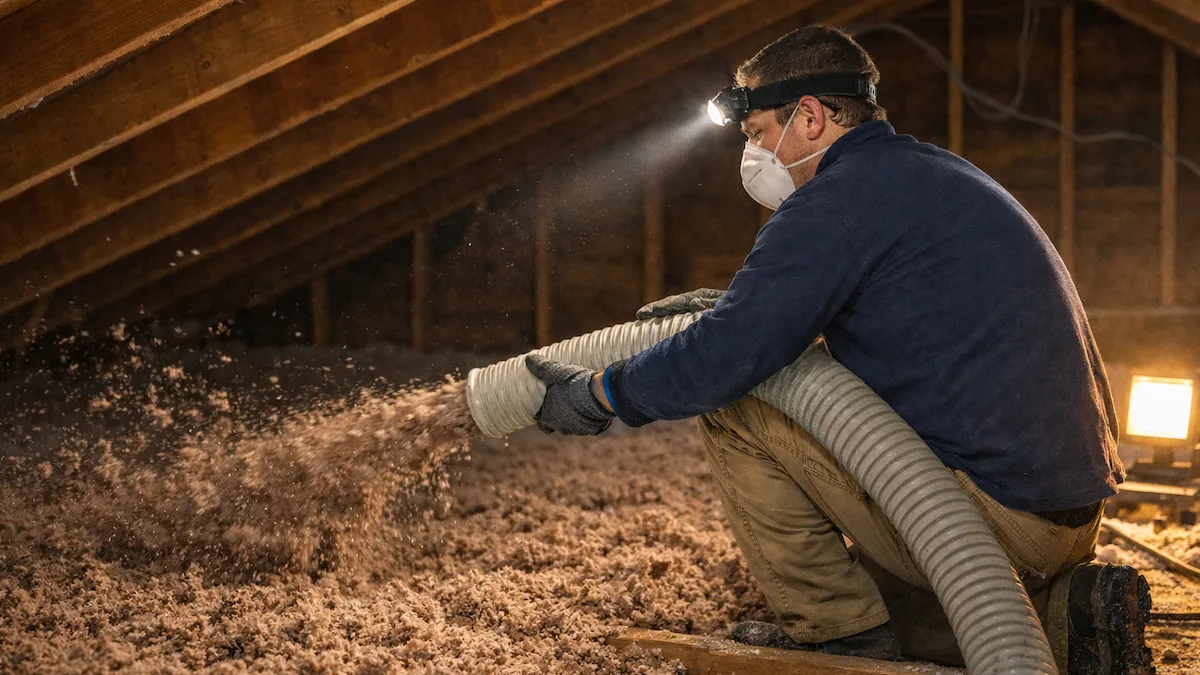
Go up into the attic of an older New Jersey home and you will often find the same thing: a few inches of yellowed insulation, matted down, with the tops of the ceiling joists sticking out. That is a house heating the attic all winter. It also shows up on the roof as ice dams along the gutters every January.
Here is how much attic insulation a New Jersey home should have, how to check what you have, and why it matters for your roof as much as your heating bill.
How much insulation does a New Jersey attic need?
Insulation is measured in R-value: the higher the number, the better it resists heat moving through it. ENERGY STAR recommends R-38 to R-60 in the attics of homes in New Jersey’s climate, with R-49 or more being a common target for an attic floor. In practice, that usually means somewhere around 12 to 20 inches of blown-in insulation, depending on whether it is cellulose or fiberglass.
How to check what you have
- Go into the attic with a flashlight and a tape measure.
- Look at the attic floor. If you can see the tops of the ceiling joists, you almost certainly need more.
- Measure the depth in a few spots. Loose fiberglass or cellulose often settles over the years.
- Look for gaps, bare spots around the hatch, and areas that were disturbed by electricians or cable installers.
- Note any wet, stained or moldy insulation. That points to a roof leak or ventilation problem to fix first.
Why it matters for your roof
When heat leaks into the attic, it warms the underside of the roof. Snow melts on the upper roof, runs down and refreezes at the cold eaves, forming ice dams that push water under shingles. Good insulation and ventilation keep the roof deck cold in winter, which stops ice dams at the source. It also keeps the attic cooler in summer, which is easier on shingles. Our post on how winter affects asphalt shingles in NJ goes into more detail.
Air sealing comes first
Insulation slows heat, but air leaks move it fast. Before adding insulation, gaps around light fixtures, plumbing stacks, chimneys, wiring holes and the attic hatch should be sealed. Skipping air sealing is one of the most common reasons new insulation underperforms.
Do not block the ventilation
Soffit vents along the eaves bring fresh air into the attic. When insulation is piled into them, airflow stops and moisture builds up. Baffles at the eaves keep a clear channel for air while letting insulation go all the way to the edge.
Blown-in vs. batts
Blown-in cellulose or fiberglass fills around joists, wires and odd shapes better than batts and is usually the most practical way to top up an existing attic. Batts work well in open, regular framing.
Frequently asked questions
Can you add new insulation on top of old insulation?
Usually, yes, as long as the old insulation is dry and not moldy. Wet or contaminated insulation should be removed first.
Will more attic insulation lower my energy bills?
In an under-insulated attic, adding insulation and sealing air leaks usually makes a noticeable difference in comfort and heating and cooling costs.
Should I insulate before or after a new roof?
Either works, and doing both around the same time is a good opportunity to fix ventilation as well. Insulation goes on the attic floor, so it does not interfere with the roofing work.
Want to know where your attic stands?
Herts installs attic insulation across New Jersey and checks ventilation at the same time. Call 908-206-4240 (NJ) or 610-772-8384 (PA), or request a free estimate.