

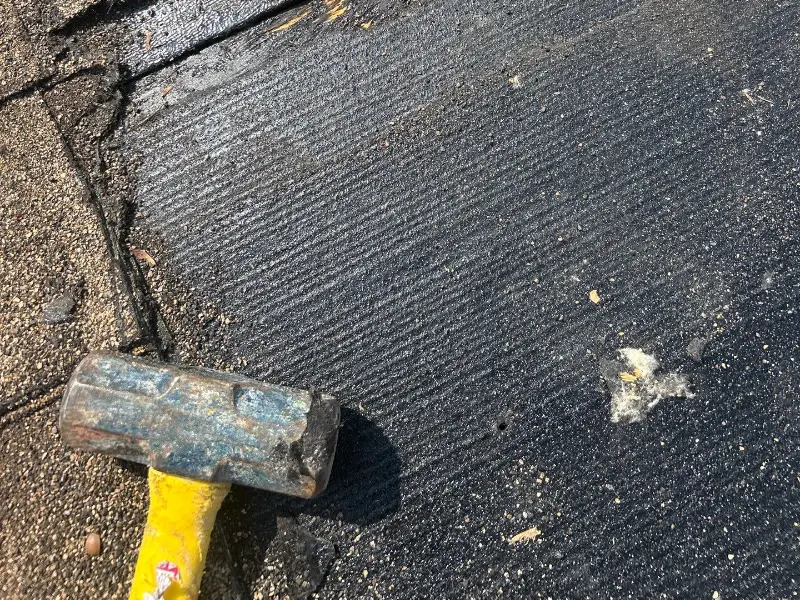
After a big wind storm, plenty of New Jersey homeowners look up at the roof, see nothing obviously missing, and figure they got lucky. Sometimes that is true. Often the damage is there but hard to spot from the driveway, and it shows up months later as a leak or a denied insurance claim because it was “old damage.”
Here is what wind damage actually looks like, how to check from the ground, and what to do next.
What wind does to a shingle roof
Asphalt shingles are held down by nails and by a strip of sealant that bonds each shingle to the one below it. Strong gusts get under the edges, especially along the rakes, ridges and corners of the roof. Three things can happen:
- Lifted shingles. The seal breaks and the shingle flaps, but stays on. It may look normal once the wind stops, but it is no longer sealed and will lift again in the next storm.
- Creased shingles. The shingle bends back far enough to leave a horizontal crease. That crease cracks over time and lets water in.
- Missing shingles. The shingle tears off completely, exposing the underlayment or the bare wood.
Signs you can check from the ground
- Shingles, pieces of shingle or ridge caps in the yard, gutters or street.
- Darker or differently colored patches on the roof where shingles are missing.
- Shingles that look out of line, raised or wavy compared to the rest.
- Bent or missing metal at the drip edge, ridge vents or flashing.
- A heavy pile of granules at the bottom of a downspout.
- Branches or a tree resting on the roof.
Use binoculars and walk all four sides of the house. Please stay off the roof itself.
Signs inside the house
- New water stains on top-floor ceilings or around the chimney.
- Daylight or wet spots on the attic decking.
- Damp insulation along the eaves.
What to do after a wind storm
- Take photos of anything you find, with the date. Note when the storm happened.
- Cover open spots if water is getting in. See what to do when your roof leaks during a storm.
- Get an inspection soon. Lifted shingles that are not resealed will fail in the next storm, and insurance companies look closely at how quickly damage was reported.
- Call your insurance company once you know the extent of the damage. Our guide on storm damage roof claims in NJ walks through the process.
Repair or replace?
A handful of missing or creased shingles on an otherwise healthy roof is a repair. If damage is spread across several slopes, if the shingles are older and brittle, or if replacement shingles will not match, a full replacement may make more sense, and storm damage like that is often what insurance covers. Read roof repair vs. replacement for more.
Frequently asked questions
How strong does wind have to be to damage a roof?
It depends on the age and condition of the shingles and how they were installed. Older shingles and roofs with poorly sealed edges can lose shingles in gusts that a newer roof shrugs off.
Does homeowners insurance cover wind damage?
Wind is a common covered cause of roof damage, but coverage and deductibles vary by policy. Damage from age or wear is usually not covered.
Can lifted shingles be resealed?
Sometimes. If the shingle is not creased or torn, it can be resealed. Creased or cracked shingles should be replaced.
Get your roof checked after the storm
Herts inspects storm-damaged roofs across New Jersey and the Lehigh Valley, photographs every problem and gives you documentation for your insurance company. Learn more about our storm damage repair service, or call 908-206-4240 (NJ) or 610-772-8384 (PA).